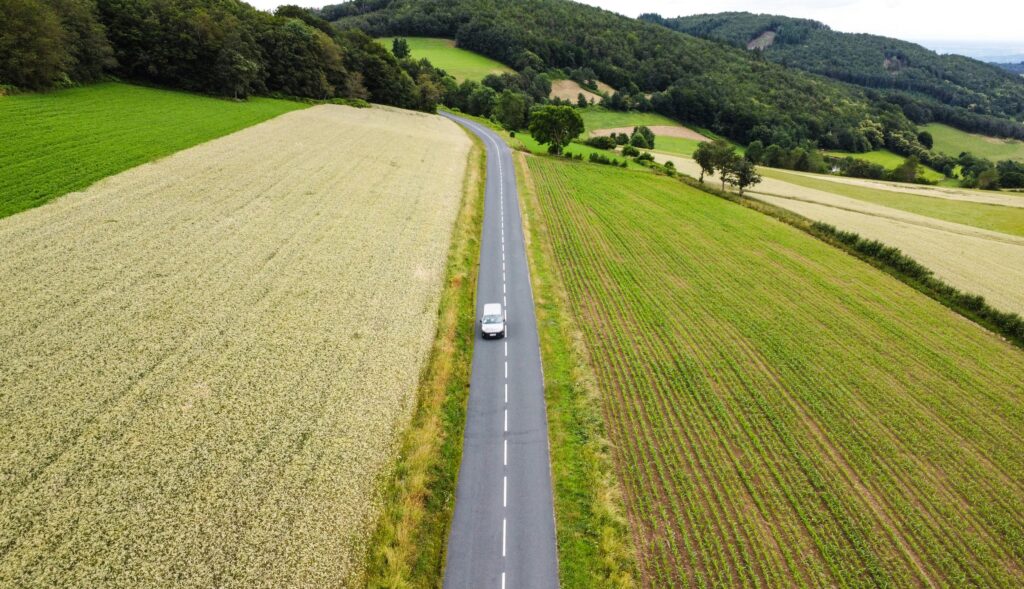
Photo by Lucas Gallone on Unsplash
Rural road trips reward careful preparation because services, cell coverage, and alternate routes can be limited. A scenic drive that looks simple on a map may include long stretches without fuel stations, restaurants, or repair shops. Start with a flexible schedule and use this practical road trip planning guide to organize the broad details.
Once you know the general direction, focus on the smaller decisions that matter outside busy travel corridors. A realistic daily distance, a well-maintained vehicle, and offline information can keep an unexpected delay from taking over the trip.
Build a Route Around Realistic Drive Times
Map the main route and at least one practical alternate before leaving home. Navigation apps may estimate that 250 miles will take four hours, but rural roads can add delays through construction, steep grades, farm traffic, or seasonal closures. Plan shorter driving days if you want time for overlooks, small-town cafes, and unplanned stops.
Check road conditions through state transportation departments near your departure date. Save the addresses of fuel stations, lodging, and medical facilities along the way, then download the map area for offline use. A paper road atlas also makes a useful backup when your phone loses service or runs low on power.
Check Your Vehicle for Rural Roads
Schedule a vehicle inspection early enough to handle repairs before departure. Ask a qualified technician to check the battery, brakes, fluids, lights, and cooling system. Look at the spare tire too, since a spare with low pressure won’t help much on an isolated road. If your current vehicle is no longer reliable for long-distance travel, you may also need to buy new car before setting out.
Tire condition deserves extra attention when the route includes gravel, uneven pavement, or changing weather. Check tread depth and pressure according to the vehicle manufacturer’s guidance. Drivers of compatible light trucks and SUVs may consider all terrain tires when their regular travel includes mixed road surfaces. Confirm the correct size, load rating, and fit for your vehicle before buying.
Plan for Gaps in Fuel and Cell Service
Top off the fuel tank before entering a remote area, even if the gauge says you could wait. A station shown online may have limited hours, no available fuel, or no card service after dark. As a simple rule, start looking for the next stop when the tank reaches half full.
Download music, podcasts, and important documents before the trip. Take screenshots of reservation details and write down key phone numbers in case cloud-based apps won’t load. Tell someone at home where you expect to be each evening. If your route changes, send an update while you still have a signal instead of assuming coverage will return quickly.
Pack for Delays, Weather and Minor Problems
Keep a compact roadside emergency kit where you can reach it without unloading the entire trunk. It should include a flashlight, reflective markers, a basic first-aid kit, charging cables, a power bank, and simple tools. Carry drinking water and shelf-stable snacks for every traveler, plus extra supplies if summer heat or winter conditions could make a delay more serious.
Clothing should match the route’s weather range, not only the forecast at your destination. Temperatures can shift quickly with elevation or after sunset. Pack a warm layer, rain protection, and sturdy shoes even if you expect to spend most of the day inside the vehicle.
Leave Room for Local Conditions
Rural communities often run on different schedules from larger towns. Restaurants may close between lunch and dinner, shops may shut early, and lodging desks may not operate overnight. Call ahead when a stop is central to your plan, especially on Sundays or public holidays.
Respect signs, private property, and temporary access restrictions. Slow down near homes, livestock areas, and road crews, and avoid blocking gates or narrow shoulders when stopping for a photo. If severe weather develops, choose a safe town or established lodging option instead of pressing toward the next planned destination.
Before departure, write the next fuel stop and evening address on a small card for the dashboard. That single backup can be surprisingly useful when the road is quiet, and your phone has no bars.

Leave a Reply