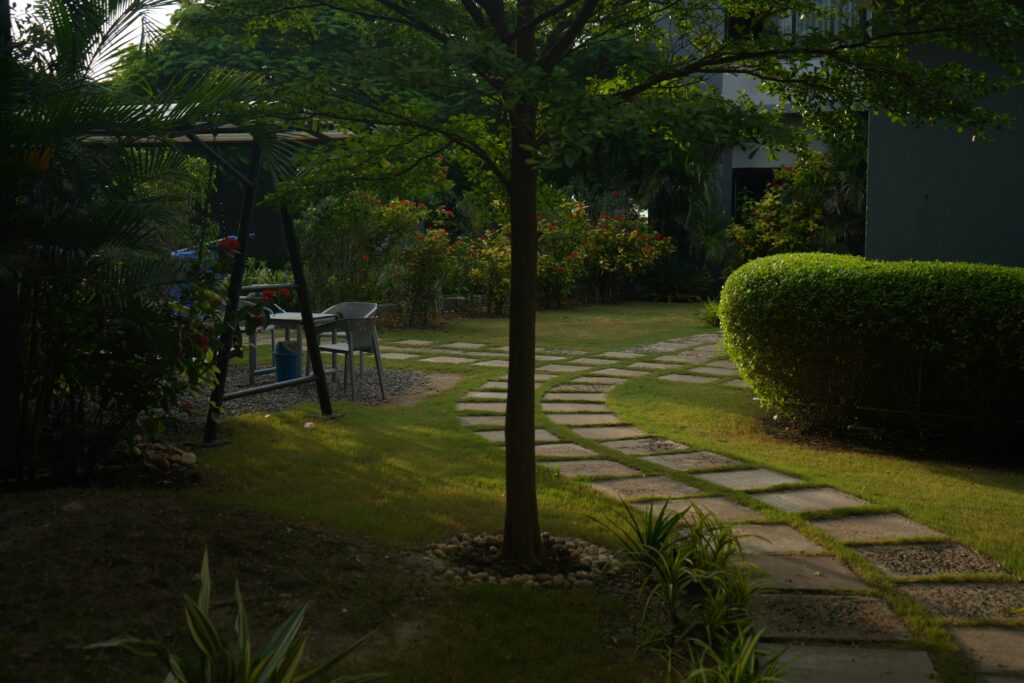
Photo by Darshan Sarang on Unsplash
Retirement often changes how you use your home, making safety, upkeep and predictable expenses much more important. Outdoor projects completed beforehand can reduce physical work later and help you enjoy the property for years. Several recommended pre-retirement renovations focus on long-term accessibility and lower maintenance, and those same priorities should extend beyond your front door.
The following upgrades address common trouble spots without requiring a complete yard renovation.
Level Pathways and Non-Slip Walkways
Repair uneven pathways before small cracks and lifted sections become tripping hazards. Tree roots, settling soil and repeated freezes can leave concrete slabs at different heights. A contractor may be able to grind down a raised edge or level a slab without replacing the whole walkway.
Aim for wide, stable routes between the driveway, entrances and outdoor seating areas. Textured concrete, pavers with tight joints and slip-resistant coatings offer better traction in wet weather. Keep transitions between surfaces smooth and add sturdy handrails along steps or sloped areas. If you expect to remain at home long term, consider replacing a short flight of stairs with a gently sloped path where space permits.
Modernizing Buried Waste Equipment
An aging underground waste system can create disruptive repairs at the worst possible time. Review installation records and schedule a professional inspection before retirement, especially if the system has recurring drainage problems, unpleasant odors or unusually green patches over the drain field.
Replacement may involve soil testing, local permits and a system design matched to the property’s size and conditions. Property owners in Western North Carolina who need a new residential or commercial system can explore septic tank installation services that cover evaluation, design and code compliance. Ask the installer to map tank lids and drain field boundaries. Keeping that diagram with your home records will make future pumping and maintenance easier.
Energy-Efficient Exterior Lighting
Good exterior lighting makes steps, gates and walkways easier to see after sunset. Replace outdated fixtures with LEDs, which consume less electricity and typically need fewer bulb changes. Choose warm white lights that illuminate walking surfaces without shining into bedroom windows or neighboring properties.
Motion sensors work well near side entrances and storage areas, while dusk-to-dawn controls can handle frequently used paths. Solar fixtures may be useful in bright, open locations, but shaded yards often need wired or low-voltage options for dependable light. Place controls somewhere accessible and label any timers at the electrical panel. A simple setup will be easier to adjust if your schedule or mobility changes later.
Drought-Tolerant Low-Care Landscaping
Simplify planting beds by choosing species suited to your soil, sunlight and usual rainfall. Native perennials and regionally adapted shrubs often need less watering once established. Group plants with similar moisture needs so you aren’t watering an entire bed for one thirsty variety.
Practical outdoor usability upgrades can also improve curb appeal while reducing routine work. Replace narrow strips of hard-to-mow grass with mulch or ground cover, and keep mature plants far enough from paths that they won’t crowd the walking area. Drip irrigation delivers water near roots and limits runoff. Before buying anything, check each plant’s mature height and width so annual pruning doesn’t become a major chore.
Automated Drainage and Runoff Controls
Watch your yard during a steady rain to find puddles, overflowing gutters and water flowing toward the foundation. These observations can help a drainage professional locate problems that may remain hidden on dry days. Downspout extensions, catch basins and properly graded swales can direct water toward a safe discharge point.
For greater convenience, consider a sump pump with a battery backup and a high-water alarm. Smart sensors can send a phone alert when water appears in a basement, crawl space or low outdoor utility area. Clean gutters at least twice a year, and test pumps before the wettest season in your area. Any buried drains should have accessible cleanouts so blockages can be cleared without digging up the yard.
Plan these projects around their potential for disruption. Underground system work and drainage corrections should come before new paths, lighting or planting beds since heavy equipment can damage finished surfaces. Once the larger work is complete, you’ll have an outdoor space that asks less of you and remains comfortable through changing seasons.

Leave a Reply